Mostrando entradas con la etiqueta golf swing for seniors. Mostrar todas las entradas

lunes, 3 de diciembre de 2018

How You Too Can Build A Tour Quality Golf Swing

When you watch a tour pro swing the club, do you ever wonder...


"How in the heck do they do that? They make it look so darn easy! Their swings are smooth, effortless, and it doesn't even look like they are swinging hard... yet they bash drives 300+ yards down broadway all day!"

Maybe you even pause the TV sometimes, and just watch them swing over and over again... dumbstruck with how simple they make it look.

After that, you find a "hot tip" and get the bright idea to head to the driving range, thinking you've finally "figured something out."

However, next thing you know you're out on the range with the same jerky, inconsistent golf swing, beating balls in every which direction.


I get it... it's frustrating!

It doesn't take a rocket scientist to figure out there is a strong correlation between the smooth, powerful golf swings possessed by tour professionals and top amateurs, and shooting lower scores... but it's a tough nut to crack.

Whether you're looking at the greatest players of this generation, or you rewind history by 50 years, it's all the same; most great players have smooth golf swings that produce an incredible amount of power... and they make it look effortless.

The question is... how?

How does a tour pro that's 5'9" and only weighs 160 pounds soaking wet (think Rory McIlroy, Camillo Villegas, Justin Thomas, etc.) somehow manage to crank 300+ yard drives consistently, while you see bigger, stronger guys who can't hit it past the 240 mark?


What's going on here?

Clearly, top amateurs and elite tour players know something you don't. Not to worry though, because today I have something truly special that's going to help you groove a powerful, effortless golf swing that will give you "tour-like" performance.


You see, for months now a special project has been going on that's going to finally allow you to build a tour quality golf swing from the comfort of your home. Up until now, this program has only ever been available to a small, private, select group of golfers. And it's been on a drip fed week by week basis.

But today, for the first time ever, you can now download a PDF, videos, and audio of The Long Game Mastery program by going here. 

Here's what one golfer had to say after completing The Long Game Mastery Program that you can now get and download all at once here:

Pain-Free Golf Swing!

"From the very first lesson I started to improve my ball striking. It didn't happen overnight but after every new lesson I would work on a new component of my swing and my ball striking would get a little more consistent. The cumulative effect of this has been quite remarkable. 

The first (which I didn't expect) was a more pain free golf swing. My friends say it's because my swing is much more simple now. Even though I am swinging easier the ball is going a lot further. At a guess I would say a good 20 yards further. This certainly makes golf more fun.

 The instructions in the lessons were very detailed and easy to follow. Thank you for taking the time to put together such a wonderful way to learn a golf swing."


Go here to get The Long Game Mastery Program on special because it's the best, most step-by-step way for you to build a great golf swing. 


sábado, 1 de diciembre de 2018

Here's A Simple Drill To Reduce Golf Swing Tension (so you hit the ball further!)

Does this sound like you?...

You feel a lot of tension in your golf swing and you try to tell yourself to relax but the harder you try to do this the more tense you become.

If this does sounds like you the first piece of advice is to not "try."

Why?

Because trying creates tension in your golf swing so cut that "trying" out first because it's costing you distance and accuracy.


Next you should go out to your driving range and simply hit balls while humming quietly to yourself. 

When you're doing this focus on your humming and notice if it stops or changes pitch at any time during your golf swing.
Just keep hitting balls focusing on your humming with the goal of swinging without the hum changing pitch or volume from the moment you start swinging to the end of your golf swing. 
But please don't "try" to achieve this. Simply keep swinging and focusing on your humming, and soon without you noticing the "whys" or "hows" your golf swing will become more rhythmical and less tense.

Once your golf swing is more in tune with your natural rhythm you want to keep it that way.

Do this by having a few golf swings each day while quietly humming to yourself. Doing this will help you to have a golf swing with less tension and consequently you'll hit the ball further and more consistently.

For more great tips like this to help you hit the ball further along with a complete program designed specifically by a sports scientist to help you swing faster and hit the ball further go to 


jueves, 29 de noviembre de 2018

Take this free Golf Swing Tes

Hi 

It’s been discovered that you could have just ONE swing fault that is stopping you from ball striking consistency and success.

But luckily for you, now you can take a simple 2 minute test to see if you have this swing fault or not.


If you don’t have this swing fault, that’s great. But if you do have this swing fault you’ll want to know about it because it WILL be costing you….

==> Distance (could be up to 50 yards)
==> Accuracy, and
==> Consistency

So to find out whether you have this swing fault or not go here and take this simple 2 minute golf swing test:

It will take you less than 2 minutes to take this test and it may just be the most valuable 2 minutes you’ll ever spend….as far as your golf swing is concerned. So go and take this test right now.

My best

If you suffer from an over the top problem or your divots point left of the target then you need to go and take this test right now!


lunes, 26 de noviembre de 2018

Ever done this with your golf swing?

How many times have you thought you found the secret to golf only to 
be let down... again and again?

You might have read something in a golf magazine and it worked for a 
while.  You could have seen something in a person's golf swing and it 

worked for you for a while.  You might have taken a lesson and hit the 
ball great for a while.  You might have purchased a new club that helped 
you to hit it great... for a while.

How many times have you thought you found the secret to great ball 
striking, only to be let down again and again?

Well, that's all going to stop today -- you have to listen to this...

Jeff Richmond from ConsistentGolf.com was doing a research article 


on how much top professional golfers move their head in their swing.  
As part of that he analyzed in depth 23 great golfer's swings.  As he was 
doing that he noticed something odd in Ben Hogan's swing that was the 
complete opposite of every other great golfer's swing.

Intrigued, Jeff tried the move himself.  This was on the 5th of March, 2015.  

Immediately Jeff went from averaging 10 greens in regulation to averaging 
14 greens in regulation (pro level).  But because had been burnt so many times in the 
past with false hopes, he waited 7 months before revealing his newly found
swing secret to anyone.

To do this he released his Ben Hogan secret in November of 2015 just to 
see what other golfers results were with this secret move.  After releasing this 
product he took it off the market to wait for the results from golfers all around

the world to come in.  And the now the results are in, and they have 
been remarkable.  Go here to see them:


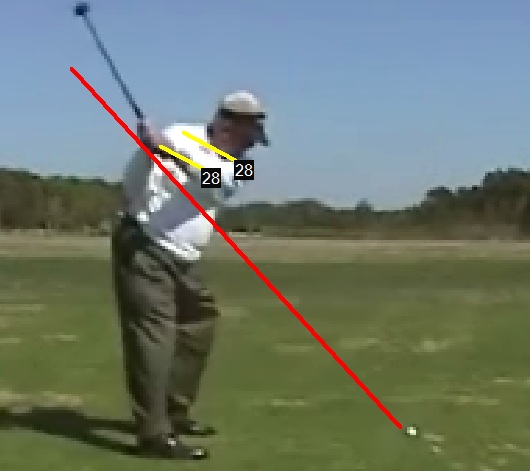
The Stress-Free Golf Swing really is a break-through for golf swing instruction.  
Imagine having one move that you need to perfect that powers your 
entire golf swing.  It really is remarkable.
So if you've been searching for a simple swing, this is it.

If you want a golf swing you can trust in, even if you only play once a week, this is it.

If you want to finally hit the ball properly and control where it goes, this is it.

Go here to find out how you can get all of this and more:

 I imagine you've tried and been let down by many things in the past claiming 
to help you.  But I implore you to go here and check this out now.  It is something 
completely different, as this one move goes completely against what is traditionally 
taught.  And Ben Hogan did this move...


jueves, 22 de noviembre de 2018

Introducing The Hybrid Swing Plane

Today I have another great article by Jeff Richmond that explains the Hybrid Golf Swing Plane he advocates and teaches. Let's get started...

The Hybrid Golf Swing Plane
By Jeff Richmond

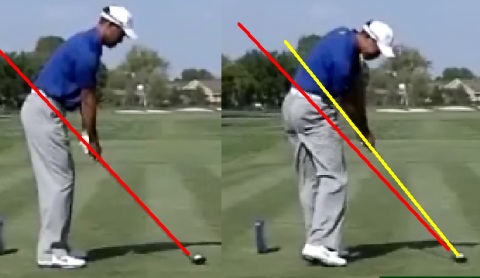
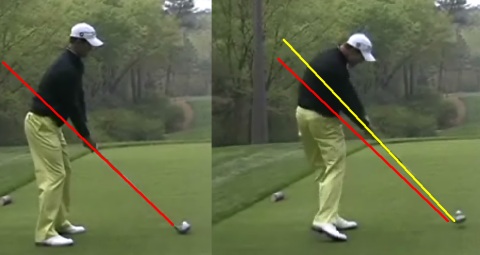
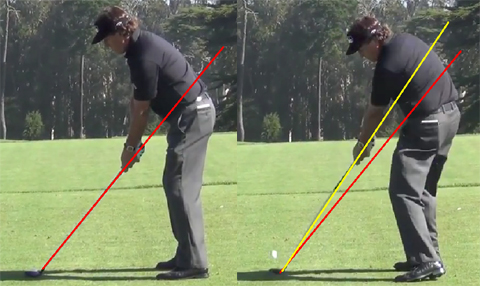
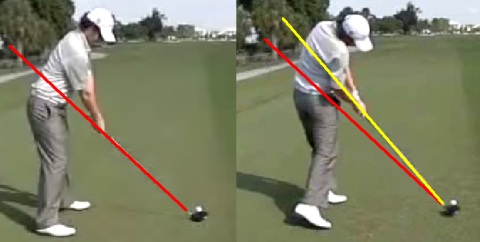
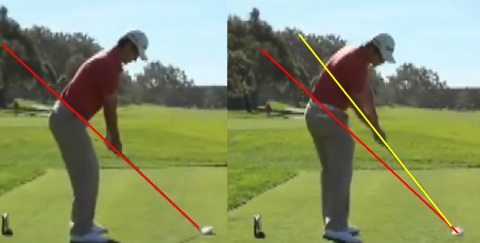
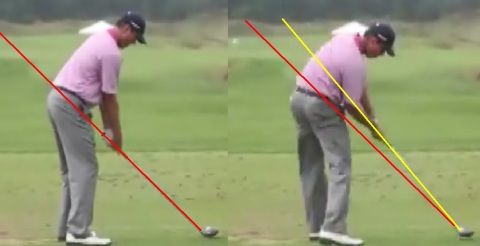
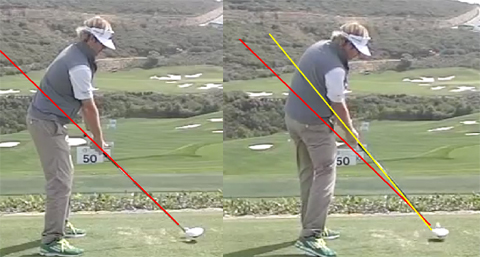
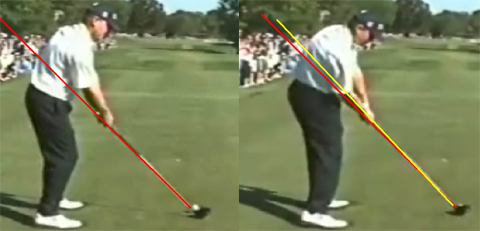
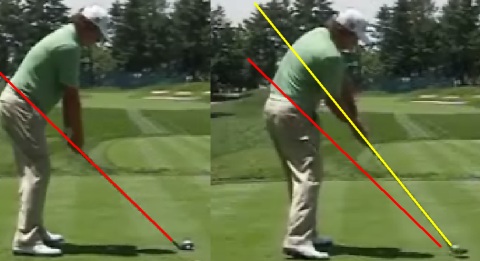
A big tenant of the one plane golf swing is to return the golf club back to the same position it was (in terms of the shaft plane line) at address. That's what Moe Norman and Ben Hogan did.

But let's see how some of the top golfers in the last 10 years fare as far as that is concerned.
1. Tiger Woods


2. Adam Scott


3. Phil Mickelson


4. Rory McIlroy


5. Justin Rose


6. Henrik Stenson


7. Matt Kucher


8. Brandt Snedeker


9. Steve Stricker


10. Jason Duffner


So 9 of the top 10 golfers in the world over the last 10 years DO NOT return the clubface to the same plane line that they started at at address (Steve Stricker does).
Why did I show you that?

Because I believe the plane line should be more vertical than a one plane swing, and not as vertical as a two plane swing. 

Somewhere in the middle. A great model I'm going to show you in a minute for this, is Louis Oosthuizen.
But these impact pictures begs the question... are they trying to do that?

The answer is no!

Because it's been proven that the golf swing is moving way too fast at impact to consciously do anything. So what is happening at impact is this...
The forces are so great at impact that the hands are being pulled up. That's just a natural occurrence of the modern, powerful golf swing.
So that got me thinking how it would be good to swing on a plane that is similar to what happens at impact.

 Because you can talk all you want about one plane and two plane swings (in terms of the backswing and shoulder plane, left arm angle etc.). But at the end of the day, it's what happens at impact that matters.

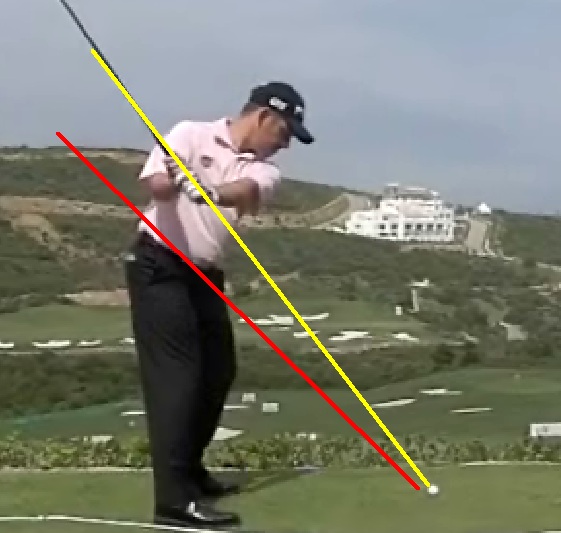
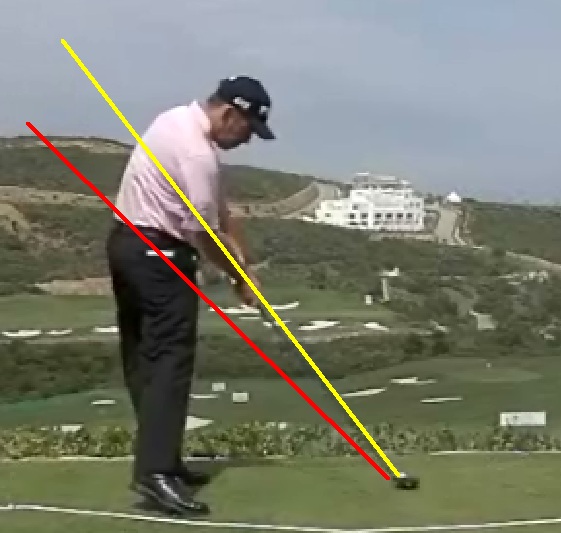
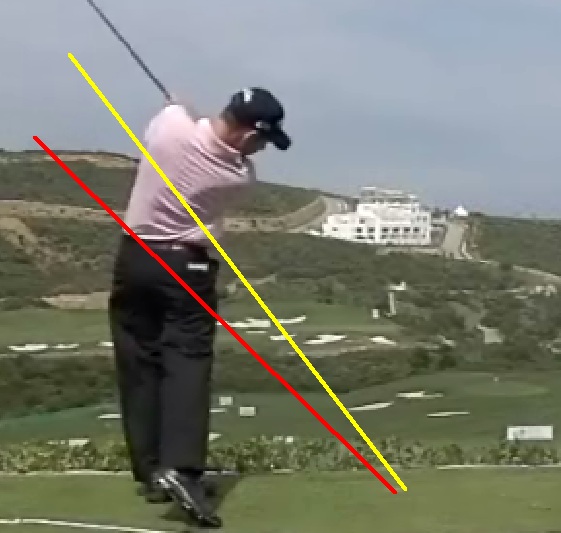
So my Hybrid Golf Swing Plane theory, is to swing back so that at the half-way point in the golf swing the club shaft points down at the ball. 

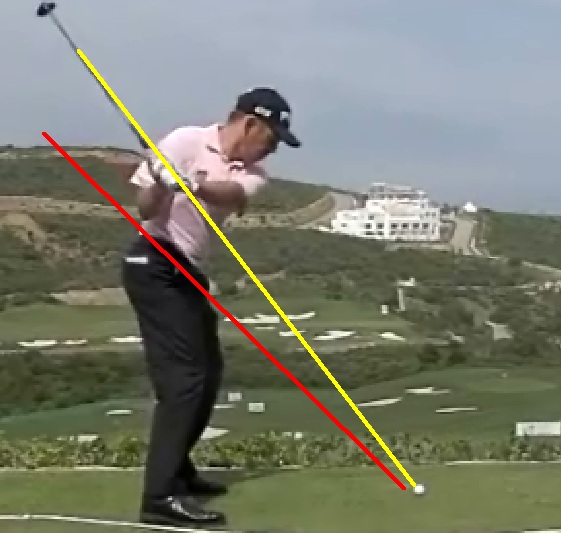
Then at the half-way point in the downswing, the clubshaft again points at the ball. I'm now going to show you this theory in action in one of the best swings on the planet.

Louis Oosthuizen is the 2010 Open Champion and has a golf swing that many believe is one of the best among professional golfers. 

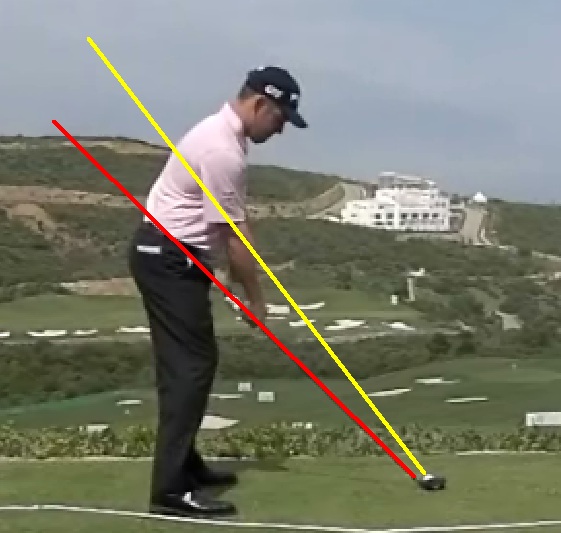
So let's put my swing plane theory to the test, and I'm going to draw a line through his setup at address right through the middle of his back.
Setup


Half-Way Back


Half-Way Down


Impact


Follow-Through


Pretty damn good swing, with a very consistent swing plane!
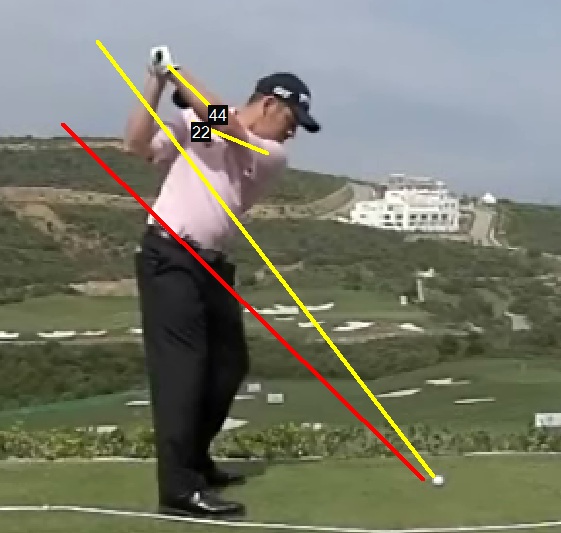
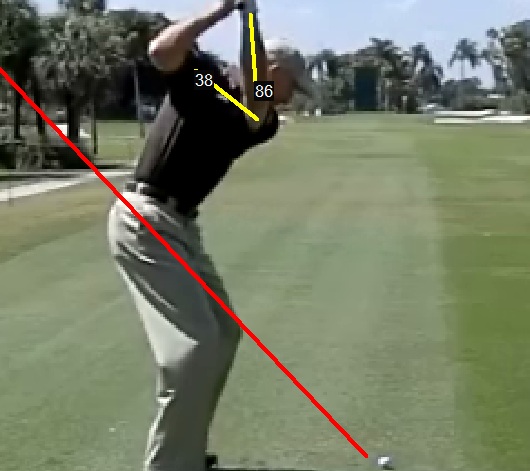
If you remember, in my last article I said a way to see if a person swings on a one plane swing, is to measure at the top of their swing the angle of the left arm and the shoulders. And if there's less than 12 degrees difference then they have a one plane swing. Let's see what the difference is for Louis:

Louis Oosthuizen - 22 Degrees Difference


Compare that to Moe Norman and Jim Furyk. Extremes of a one plane and two plane swing:
Moe Norman (One Plane Swinger) - 0 Degrees Difference


Jim Furyk (Two Plane Swinger) - 48 Degrees Difference

And if you split the difference between those extremes you get 24 degrees. Louis Oosthuizen at 22 Degrees Difference is almost bang in the middle.

And this swing plane that Louis uses is what I term "The Hybrid Swing Plane". 

I have a swing plane program in which I'm going to teach you how to groove a consistent golf swing plane like this... so watch out for an email about that program soon. 


Having a consistent golf swing plane will help you to hit straighter, longer and more consistent golf shots. So if you lack consistency in your ball striking, working on making your golf swing plane more consistent can only aid you in improving your ball striking consistency.


Anyway, I hope this series I've given you on the swing plane has clarified a lot of issues you had with understanding the swing plane. And I hope that now you have a very clear idea on what swing plane you should be swinging back, down and through on.
 ____________________________________________________
I hope you enjoyed that swing plane series by Jeff Richmond.  

Jeff has a great program that helps you to build a consistent swing plane. 
 I'm trying to get a deal on that program for you.  Hopefully I will be in touch later this week with some good news.  


Finally! The Golf Swing Plane Explained In Simple Language

Hi 
Today I have something new and exciting for you. Over the next few weeks I'm going to be giving you some great information about the swing plane, from a man named Jeff Richmond.


As you're no doubt aware, the swing plane is so important in terms of distance, direction and consistency. 

And if you get the swing plane correct, you will have way more chance of hitting good shots consistently.


So in today's first installment on the swing plane, Jeff is going to get everyone on the same page by explaining exactly what the swing plane is.

 And once he's done that, he will then move into some more detailed aspects of the swing plane, and what you need to do to have a consistently good swing plane.
Alrighty then, let's make a start...

What Is The Swing Plane?
By Jeff Richmond, Director of Instruction, ConsistentGolf
When you start looking at the swing plane you can get confused - FAST!


It's an area where the more scientific/engineer types seem to have a field day. 

And if you're not that way inclined you can read and watch some stuff on the swing plane that will just give you a headache!


In today's article, I'm going to try to keep this nice and simple so we can all be on the same page for the rest of this swing plane series.


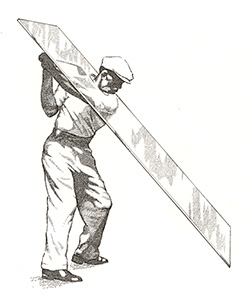
Now, the swing plane first became popular thanks to Ben Hogan and his image of a pane of glass.
When Ben Hogan was talking about the swing plane in terms of the pane of glass, he wanted the the left arm, hands, club etc. to stay below that pane of glass on the backswing and downswing.


But when Ben Hogan's famous five lessons book was published in 1957, they didn't have the technology like we do today to dissect the golf swing to the nth degree. And so the concepts of the swing plane have evolved a lot from the simple illustration that Ben Hogan gave us.


So what is the golf swing plane?
Well, the golf swing plane is an imaginary flat service that is used to determine what path certain parts of the body and club are traveling on throughout the golf swing.
This may sound stupid, but it has to be said.... the golf club cannot move itself. A lot of times when people look at the swing plane they only look at the shaft. 

 But the shaft is only moving as a result of the body movements. 

So you need to look very carefully at the plane your body is moving on when looking at swing plane.
There are three swing planes in the golf swing, and they are:

1. The backswing plane
2. The downswing plane, and
3. The follow-through plane

It's important to note that I said above "certain parts of the body and club", because when you swing your shoulders move on a plane. Your elbows move on a plane. Your hands move on a plane, your club moves on a plane etc, etc.


That's why if you see someone analyzing a golf swing, they'll draw a lot of lines to try to analyze what plane different parts of the body and club are moving on.
When you swing you're obviously swinging in a circular pattern. And because you're bent over when swinging your swing plane is tilted. How much it is tilted depends on the player's height, how they stand to the ball, the club being used etc. etc. There's a number of different variables.


So everyone will not have the same swing plane because of this. And so there's no one exact swing plane for everyone. 

When I say that, I'm talking about absolute degrees of swing plane. But there are good reference points every golfer can use, and I'm going to discuss these in this swing plane educational series.


When you hear about swing plane you often hear people saying that "so and so" has a flat swing plane, or this golfer has a steep swing plane.


When people say that, what are they referring too?
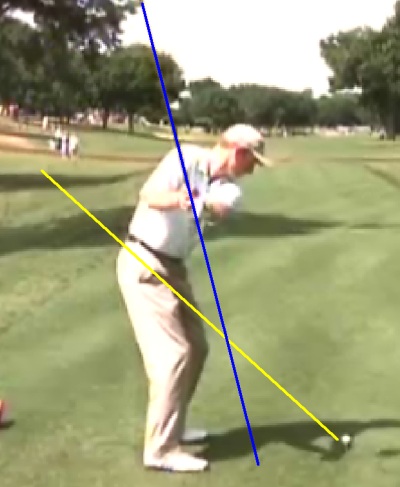
Most of the time they are referring to the shaft angle. And a good checkpoint is halfway into the backswing. A famous golf pro who is said to have a flat swing plane is Zach Johnson. 

Here is a picture of Zach at the half-way point in his golf swing.
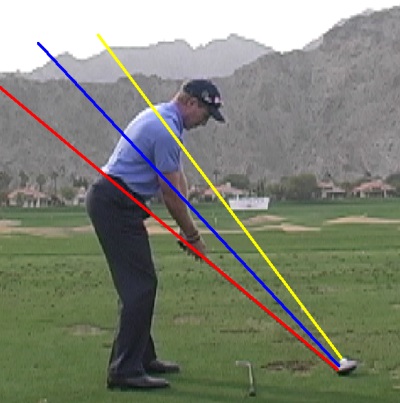
Zach uses a one plane swing to hit the golf ball. So anyone that is a fan of the one plane golf swing will not say that Zach's swing is flat. They'll say it's on plane. That's where golf instructors get into arguments. 

In the next email I'm going to talk more about the one plane swing, two plane swing etc. But for now, notice that at the half way point in his backswing the club shaft is pointing out side the ball.


Now compare that to probably the most extreme case of a two plane swing, and that is Jim Furyk. Look where the shaft is pointing at the half way point in his backswing.
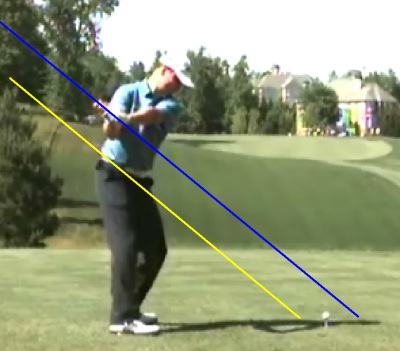
If you compare those two swing planes, is there any wonder amateur golfers are confused about the swing plane?! I imagine you're the same as me, in that you would swap your playing record with either of those two players given the choice! :-)
So the swing plane is a combination of the movement (arc) of the shoulders, arms, hands and club predominantly. 

And this is measured and analyzed with straight lines... so it's 2d. I have seen 3d swing plane software and analysis, but for this swing plane series I'm not even going there!

I hope that's a simple explanation and everyone is on the same page. 

If not, don't worry because over this swing plane series, you should hopefully get a much better understanding of it and what you should be trying to do with your swing plane.


I will be giving you examples of each type of player, so hopefully you should find that interesting and informative.


Easy Steps To A Professional Swing Plane

Hi

The swing plane...

Groove a consistent, repeatable swing plane like a pro
and you will have the ball striking consistency, length
and accuracy you desire.

There's no doubt about that.  And to help you do this 
I have for you today...

...a simple 3 step program, that will help you groove a 
consistent swing plane just like a pro.  Go here to find
out more: 


If you lack ball striking consistency I can almost guarantee
that your poor swing plane will be a major cause.  But when
you fix it, you will hit the ball longer, straighter and more 
consistently. 

So to find out more about the new 3 easy step, swing plane 
improvement program, simply go here:

This is priced this ridiculously cheap, so it's a no brainer to
get this new program and start to hit the ball consistently
longer and straighter... and take your buddies to the bank.

I can't wait to hear your great results!


When you implement the 3 easy steps in this new program,
you will be hitting the ball a lot longer, straighter and more 
consistently than ever... or you get your money back.  

So go here now to find out more about the new swing plane 
improvement program: